


27 February 2026 15:00 (UTC)
F1 Mailbag: New season, new regs and lots of questions that we’ll do our very best to answer
Every new F1 season throws up some questions – but 2026 is producing more than most. We have new engines, new aero and new fuels – and not in the sense of subtle derivations from well-established standards but huge, game-changing alterations.
If you’re finding it all a bit complicated, you’re in very good company. Across the paddock, everyone is still getting to grips with the technology, learning how best to interpret the rules, and trying to extract the maximum from their package. History suggests that within a couple of months this will all feel like the new normal - but until then, we’ll do our best to answer your questions… assuming we have the answers ourselves.
That’s why, ahead of the 2026 Formula 1 season opener in Australia, we asked fans to submit their questions about the new regulations. The Fifth Driver - our anonymous trackside pundit and analyst - has dug into them and answered as many as possible below.
This is the 77th season of the Formula 1 World Championship, and there isn’t a year in there where the rules – technical or sporting – haven’t been changed to some extent. F1 isn’t particularly unusual in this regard, most sports tend to evolve. This year’s regulation changes are, however, huge. a new set of engine regs and a new set of aero regs, plus all the usual housekeeping changes that take note of previous experience and fast-moving technology to make the sport safer and fairer.
Why make big changes this year? This is driven by engine regulations. The hybrids used for the last 12 years were conceptualised nearly 20 years ago, reflecting a best-guess path of hybrid tech in road cars. The new engines are a more up-to-date reflection of where hybrid road car technology is today, and where it may go in the future. The intention of the change was to attract more engine manufacturers by offering a simpler, cheaper, and more technologically attractive regulatory framework.
The new power units, by design, will have less power than the old ones, so to keep lap times in the same ballpark as before, the decision was made to make the cars more aerodynamically efficient too.
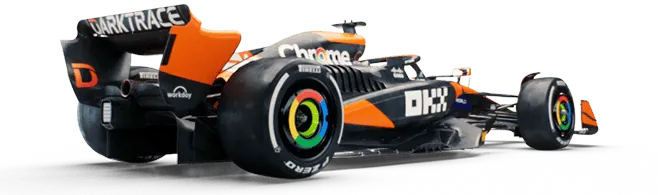
There’s been a trend over the last couple of decades for the cars to get – for want of a better word – bigger. They’ve become longer – because larger aerodynamic surfaces generate more downforce, and they’ve become heavier, because the regs are consistently demanding stronger, safer cars. We had reached a point where the cars – while faster than they’ve ever been – weren’t quite as nimble as some drivers and fans may have wished for them to be. And thus, the regs have been rewritten to reduce them in size. Importantly, safety standards haven’t been diluted, but the cars are narrower and shorter, which naturally makes them a little lighter and more agile.
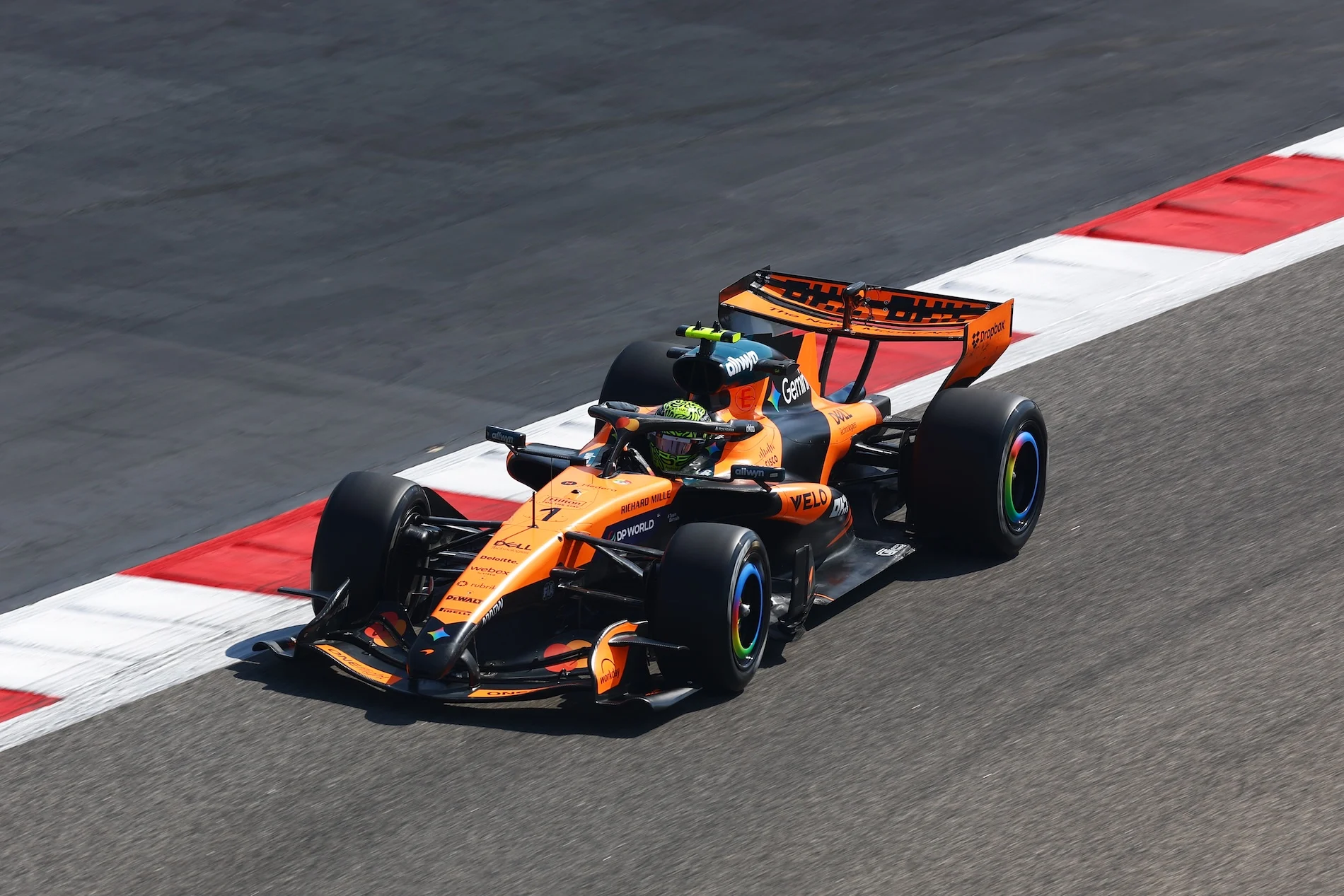
Anybody at home who’s a little confused by all of this, don’t worry, most of the paddock is right there with you! Part of the confusion stems from the fact that Active Aero looks like DRS, but that Overtake Mode functions like DRS.
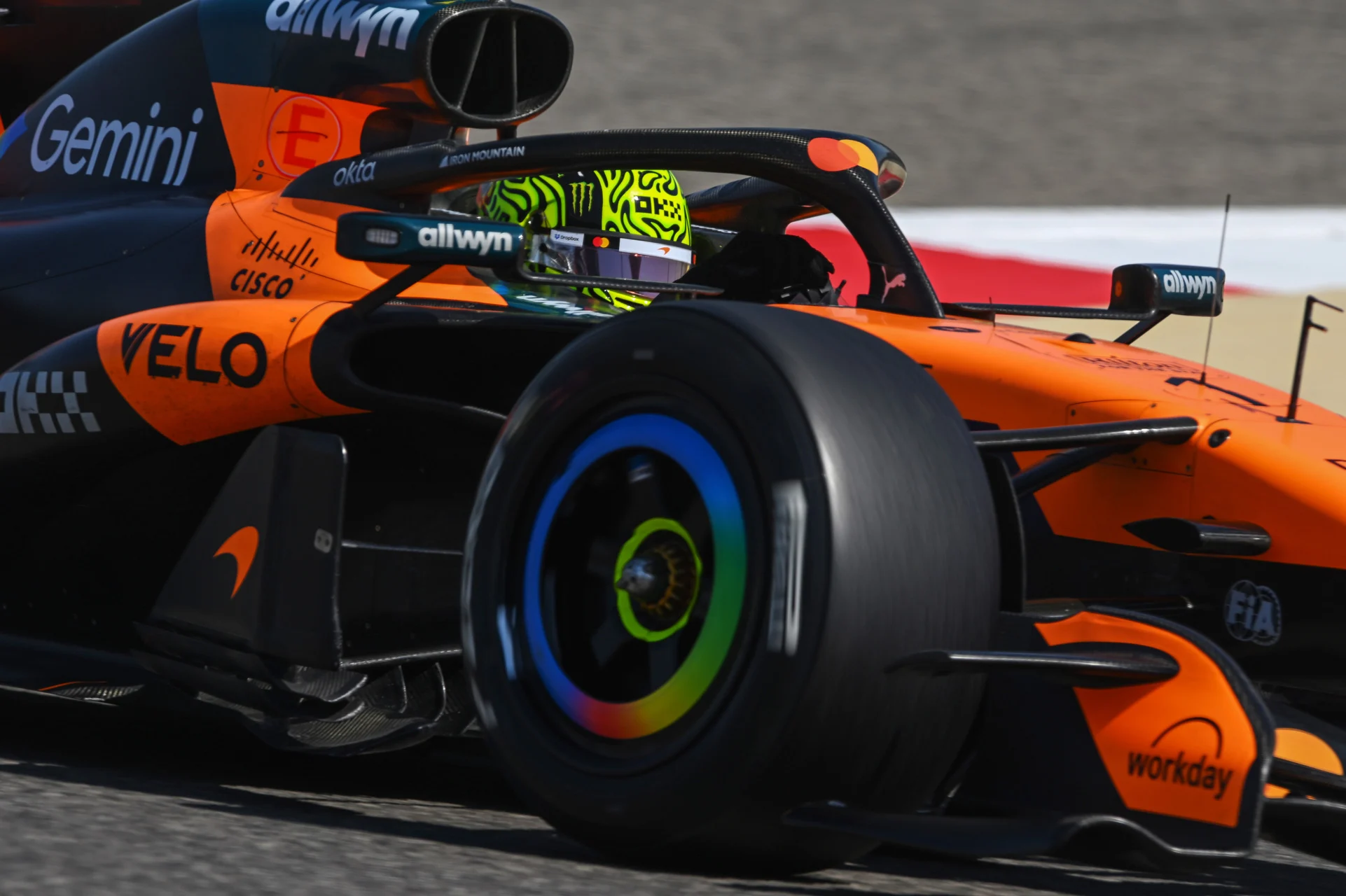
Active Aero first. These cars have a Straight Mode and a Corner Mode. In Straight Mode, the flap on the rear wing opens – exactly like they would for DRS – and the front wing elements adjust to keep the car properly trimmed in this lower drag configuration. When the car brakes, it enters Corner Mode, the flap closes, the front wing elements return to their original positions, and the car has all its downforce available.
While Straight Mode looks a lot like DRS, it isn’t dependent on position vis-à-vis another car, and will be active every lap, on every straight (though what constitutes a ‘straight’ requires some clarification). Like DRS, it will work in zones with an activation point at the start of the straight.
Overtake Mode is an entirely different animal, using extra battery power to replicate the impact of DRS. If a car gets to within one second of the car it’s chasing at a designated point (probably the final corner), for the whole of the next lap, it gets to use a little more electrical power. Without Overtake Mode active, the amount of electrical energy that can be used begins to taper off at 290km/h. In Overtake Mode, the electrical system will continue to deliver full beans all the way up to 337km/h before starting to taper.
Obviously, the car uses more energy this way, and so when in Overtake Mode, it is also allowed to harvest more energy too – and there’s no limit to the number of consecutive laps on which Overtake Mode can be used if the chasing car stays close enough.
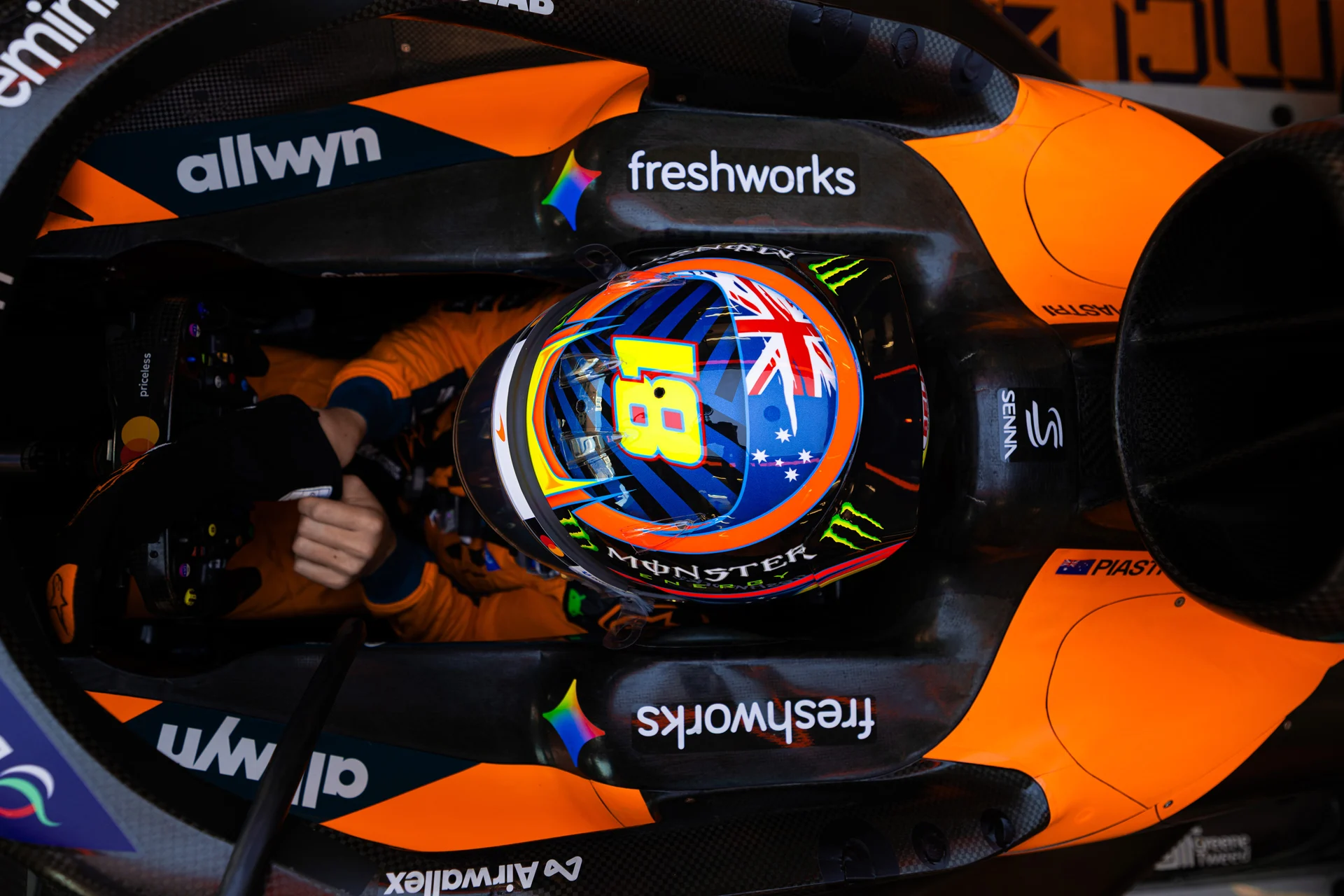
Broadly, yes. There’s a subset of rules that govern the size and placement of the cockpit and those haven’t changed. There’s a cockpit template that governs the size of the cockpit opening, and a set of regulations that specify the placement of the pedal box in relation to the front axle and the tip of the nose and so on. Potentially, there might be a little less room with the driver cooling package in place.
The 50:50 power split has been achieved by dialling down the horsepower supplied by the Internal Combustion Engine (ICE), while uprating that supplied via the electrical component – from 120kW in the old regs to 350kW in these. It is expected that approximately 50 per cent of the power will be supplied by each component.
There are different methods of recharging the battery with these cars. Recovering energy while braking is the method everyone is familiar with, but to maximise the amount of energy recovered, we’ll also see part-throttle recovery, using the engine to charge the battery when the driver doesn’t need maximum throttle (for example, in a corner). The cars will also recover energy during lift-and-coast when they’re approaching a corner. Additionally, there is a new methodology being called ‘super-clipping’: this will initiate recharge when the driver is at full throttle on the straights, diverting energy to the battery.
In the old cars, there were different automated strategies the drivers could select – at the behest of their race engineers – designed to balance recharge and use during a race, expend maximum energy on a push lap in Qualifying, or maximise recharge on an out-lap/slow-lap. Each type of strategy would have several variations, and they’d all be selectable from one of the multi-function dials on the wheel.
In addition to that, there were driver-operated ‘overtake’ and ‘anti-overtake’ buttons that are the equivalent of the ‘Boost’ and ‘recharge’ buttons on these cars. These would temporarily override the strategy setting. In a close battle – attacking or defending – the drivers would use the anti-overtake to cancel deployment during sections of the track where the battle was effectively neutralised by the layout, and then use the overtake button to attack or defend. They’d be advised on whether to use a short push of overtake, or to press and hold for a longer deployment.
Yes – but not while the car is on track. Once the car is lapping, the active aero is a binary feature: either on (Straight Mode) or off (Corner Mode). Teams, as ever, can configure the amount by which the wings move when the car is in the garage. You’ll also see the Corner Mode flap angle adjusted in pit-stops as before.
The answer is yes… mostly. It’s a little bit complicated! The regs give the cars a window of 0.4s to go from one configuration to the other. It doesn’t take 0.4s to open or close either wing – probably less than half of that – so there’s a little bit of wiggle room to stagger the opening and closing of the elements. It isn’t yet clear, however, whether you would want to.
Most of the time, teams want these things to happen simultaneously to ensure the car gets into the appropriate mode as swiftly as possible – but there are circumstances where that might not be the case. One potential situation is when the cars brake heavily: they instantly pick up a lot of downforce, and you’ll have seen from the tests that this can be a little destabilising, particularly at the front, if there’s grounding. This might make teams consider a little bit of fine-tuning.
One other caveat. The designated Straight Mode zones differ in low-grip conditions (i.e., when the track is wet). Under the old regime, Race Control would disable DRS in very bad conditions. Now, the zones will alter based on their merits. The Straight Mode zone map for Bahrain specified zones starting further down the straights for low grip, to ensure the cars were fully out of the corners and pointing in the right direction before the downforce came off. Other tracks will be different. One of the zones in Albert Park, for instance, will have the rear wing disabled in low-grip conditions but still have the front wing activate to avoid excessive grounding. Other zones will be disabled entirely.
It’s a question of the floor. During the recent ground-effect era, the cars featured shaped floors, and ran very low to the ground to effectively ‘seal’ the gap between floor and track, utilising the Venturi effect to suck the cars down to the surface, generating vast amounts of downforce. For 2026, F1 has gone back to flat-bottomed cars. They won’t have to run quite so low, and won’t generate as much downforce.
This is the big balancing act F1 is trying to achieve with its 2026 aero regulations. Reducing downforce makes the car slower in the corners, but the methods used to reduce downforce also reduce drag, making the cars quicker on the straights. The targets for 2026, as suggested in the early modelling work, were a downforce reduction of 15-30%, with a concomitant drag reduction of 55%.
Yes. The 2026 cars will definitely have less grip. While F1 is retaining its 18-inch rims, the tyres get narrower in 2026, with the rears shrinking from 405mm to 375mm, and the fronts from 305mm to 280mm. Because the tyres are narrower, the contact patch is smaller, reducing mechanical grip.
Aerodynamic grip will be lower due to a series of changes aimed at reducing drag for better straight-line speed, shrinking the cars to cut weight, and limiting outwash to help them race more closely together. Together, these measures will have a knock-on effect of decreasing downforce.
By how much is one of those questions that can’t be fully answered because it’s a constantly changing number. The intention was to reduce downforce by 15-30%, with initial estimates after the Barcelona Shakedown suggesting the cars were around 20-25% down.
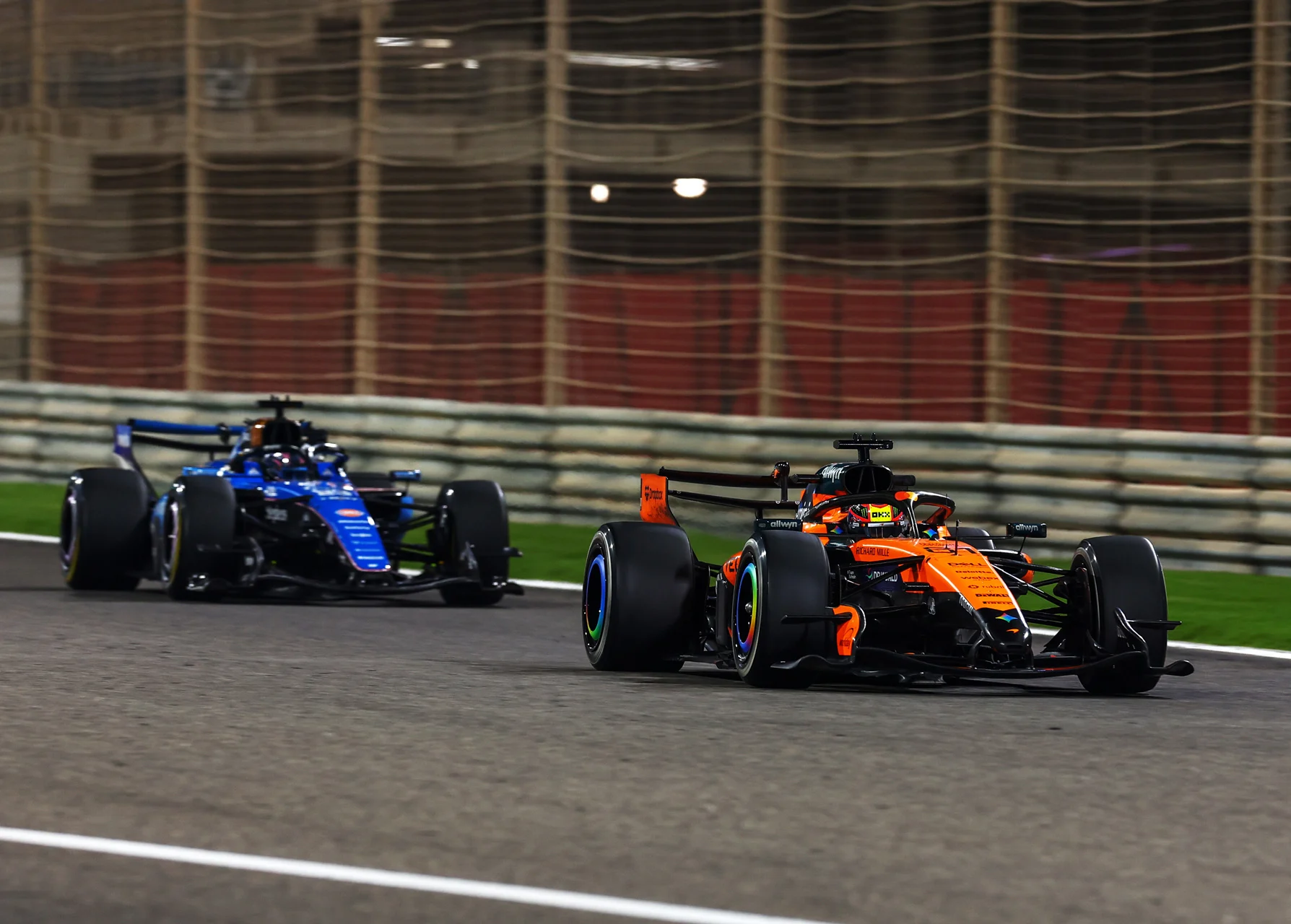
It’s an interesting question, and the likely answer is that it won’t be a comparable Xkm/h faster or slower than 2025, but will move around a lot more from track to track, depending on how much energy can be recovered, and how the car is configured. The ballpark figure is likely to be quite similar. Last year, at the Bahrain Grand Prix, the top speed through the speed trap was 340km/h. During the first week of Pre-Season Testing in Bahrain, the fastest speed was 336km/h.
Given everyone is still learning, and generally finding significant chunks of performance from how they drive these cars, it seems reasonable to assume that straight-line speeds will only get quicker, and that they’ll level off a little higher in 2026 than they were in 2025.